Bellapais Abbey & Village

Bellapais (Beylerbeyi) is a highlight of the Kyrenia district, and for good reason. It is more than just an abbey; the entire experience, the winding climb from the coast, the narrow village lanes, ancient cypress trees, shaded restaurant terraces and the expansive views back towards Kyrenia gives the visit its setting.

The journey up to the abbey

Bellapais sits on a natural terrace overlooking the Kyrenia coastline. As the road climbs through the lower, developed landscape, the village begins to tighten around the abbey itself. As you gain elevation, your perspective shifts: the town of Kyrenia drops away, the sea feels further off, and the abbey’s strategic position begins to make sense.

This location was never merely decorative; medieval monastic life relied on access to water, specific climates, and strategic status. The terrace provides the architecture with a physical logic that is often lost if you only look at photographs of the cloisters.

Plan the arrival: Village lanes are notoriously narrow, and parking can be difficult during peak periods or event days. It is a better strategy to time your visit to avoid the rush than to try and find a space at the last minute.
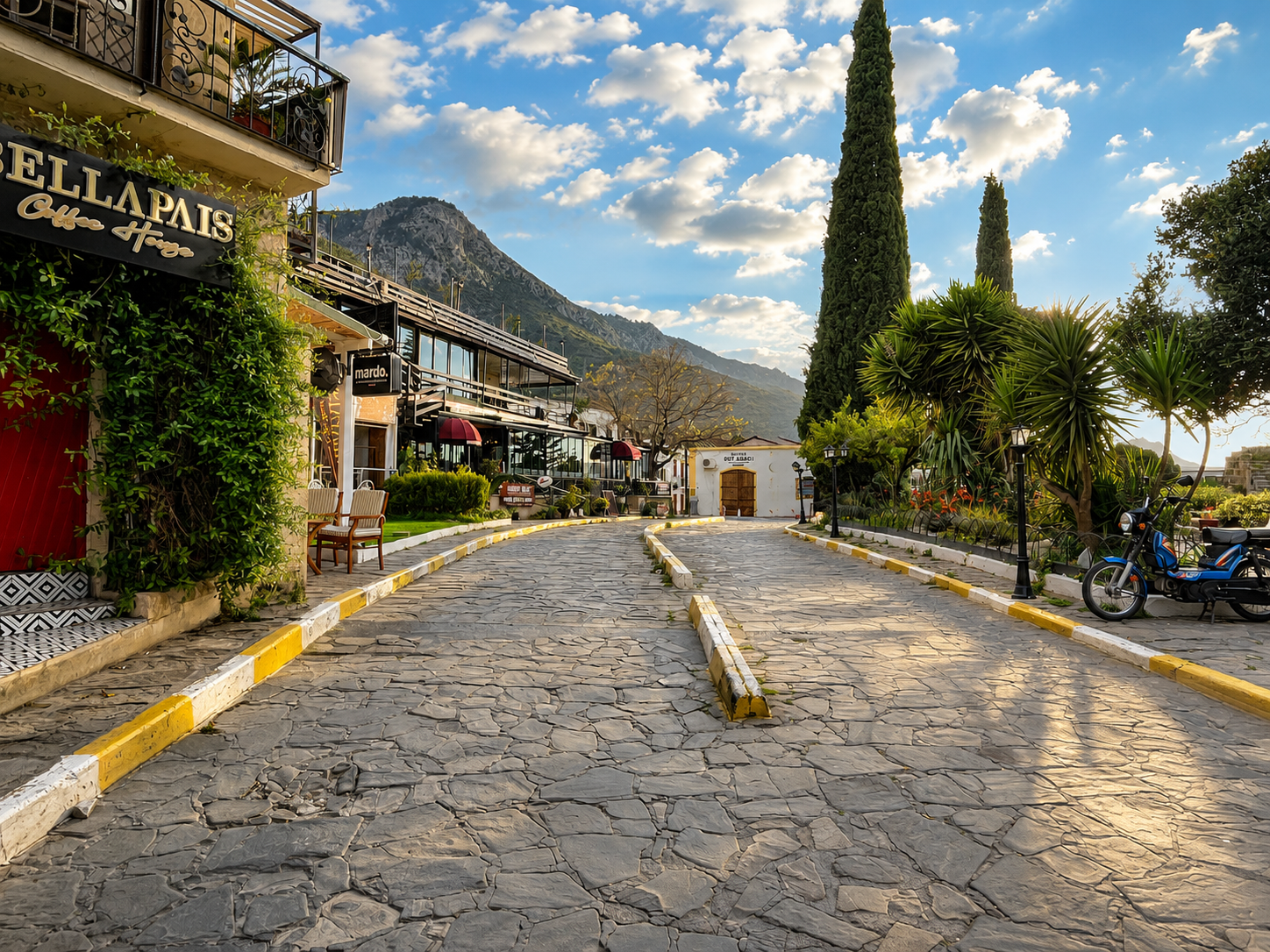
Bellapais village street below the abbey
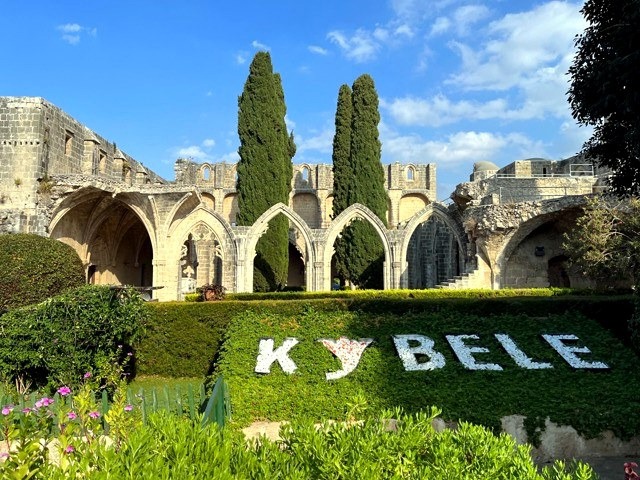
Bellapais Abbey and gardens

The abbey

Bellapais Abbey stands as a strong example of the architectural and religious story shaped by the Crusader presence in Cyprus. Established in the early 13th century, the site was founded by the Canons Regular of the Holy Sepulchre, who relocated to the island after the fall of Jerusalem to Saladin in 1187. By 1206, the abbey passed to the Premonstratensian order, the "White Canons" who occupied the site throughout the Lusignan period. Their presence established a disciplined religious life that successfully balanced contemplative worship with the practical management of the surrounding fertile lands.

Because the abbey’s construction spanned several centuries, the building does not read as a single, uniform design. Instead, it is a layering of styles. You can trace this evolution by moving through the site based on how the monks actually lived:

Life within the walls

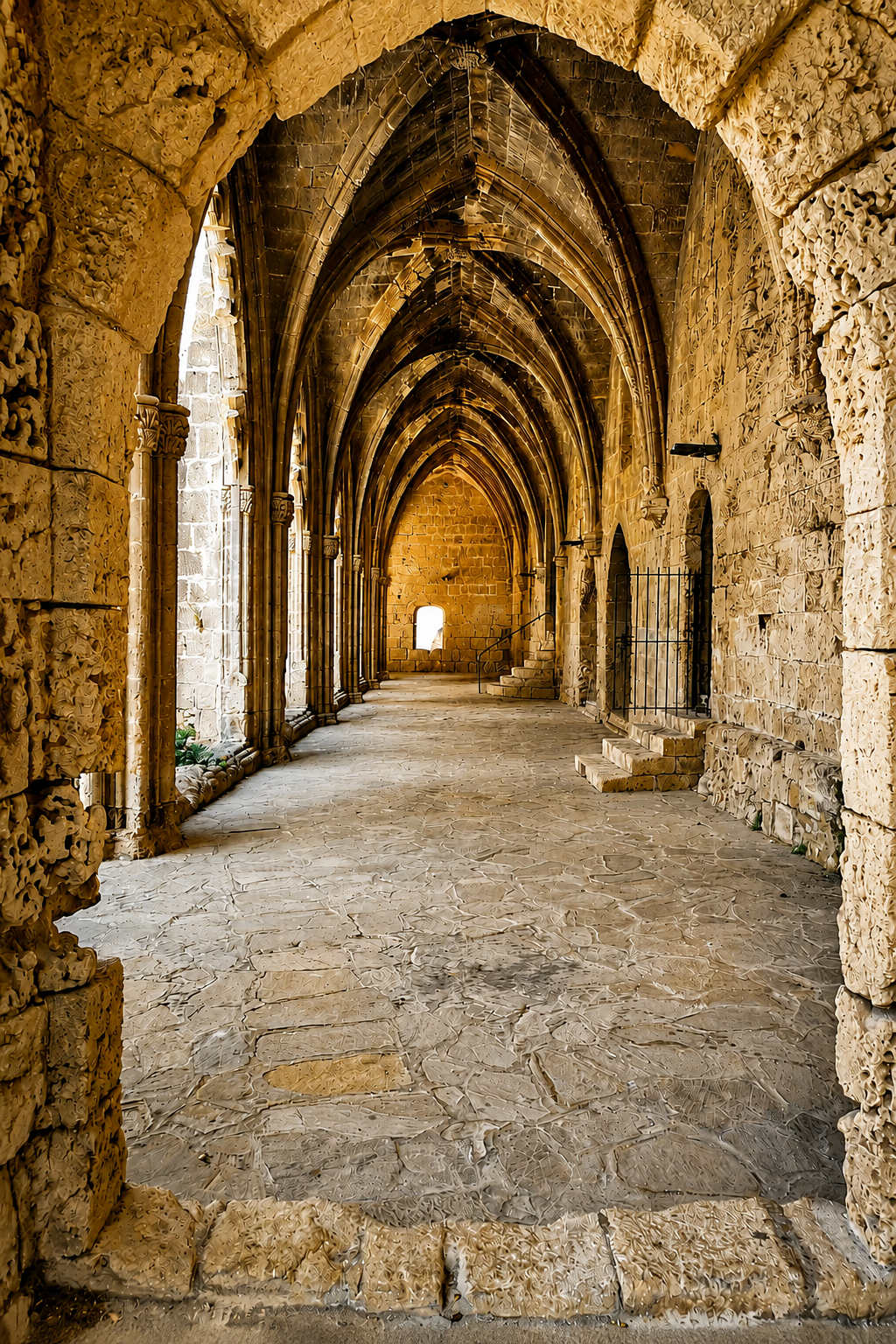
Gothic cloister and stonework inside Bellapais Abbey
Worship

The church

The oldest surviving part of the complex, dating largely to the 13th century. It is here that the Premonstratensian liturgical life was centred. Rather than rushing toward the famous cloisters, take a moment to stand in the nave. Notice the transition from the stark, Romanesque-influenced walls to the delicate Gothic detailing in the later additions. This space was the foundation upon which the rest of the monastery was built.

Movement

The cloister

Built in the 14th century, the cloister is a masterclass in Gothic proportion. It served as the heart of monastic circulation, connecting the church to the refectory, dormitories, and chapter house. Beyond its aesthetic beauty, the arcade was designed to provide essential shade during the intense Cypriot summer, creating a cool, silent space for reading and meditation. Look along the line of the arches to appreciate the rhythm and symmetry of the stonework.

Community

The refectory

This is arguably the most impressive interior space in the complex. It is a soaring, vaulted hall where the monks took their daily meals in silence. The scale of the room, complete with the stone pulpit from which a monk would read scripture during dinner, is the best way to visualise the abbey not as a ruin, but as a fully functioning, disciplined institution.

Structure

Undercrofts and terraces

Bellapais is built on a steep limestone slope, and the site’s architecture is cleverly integrated into the topography. The undercrofts, the lower vaulted levels explain how the monks managed the site’s climate and water. These functional spaces allowed the community to thrive on the hillside, creating the stable foundations for the grander levels above. When you look out from the terraces, note how the sea and the distant mountains are framed by the stone arches; the site was positioned specifically to look out over the lands the monastery managed.

The village

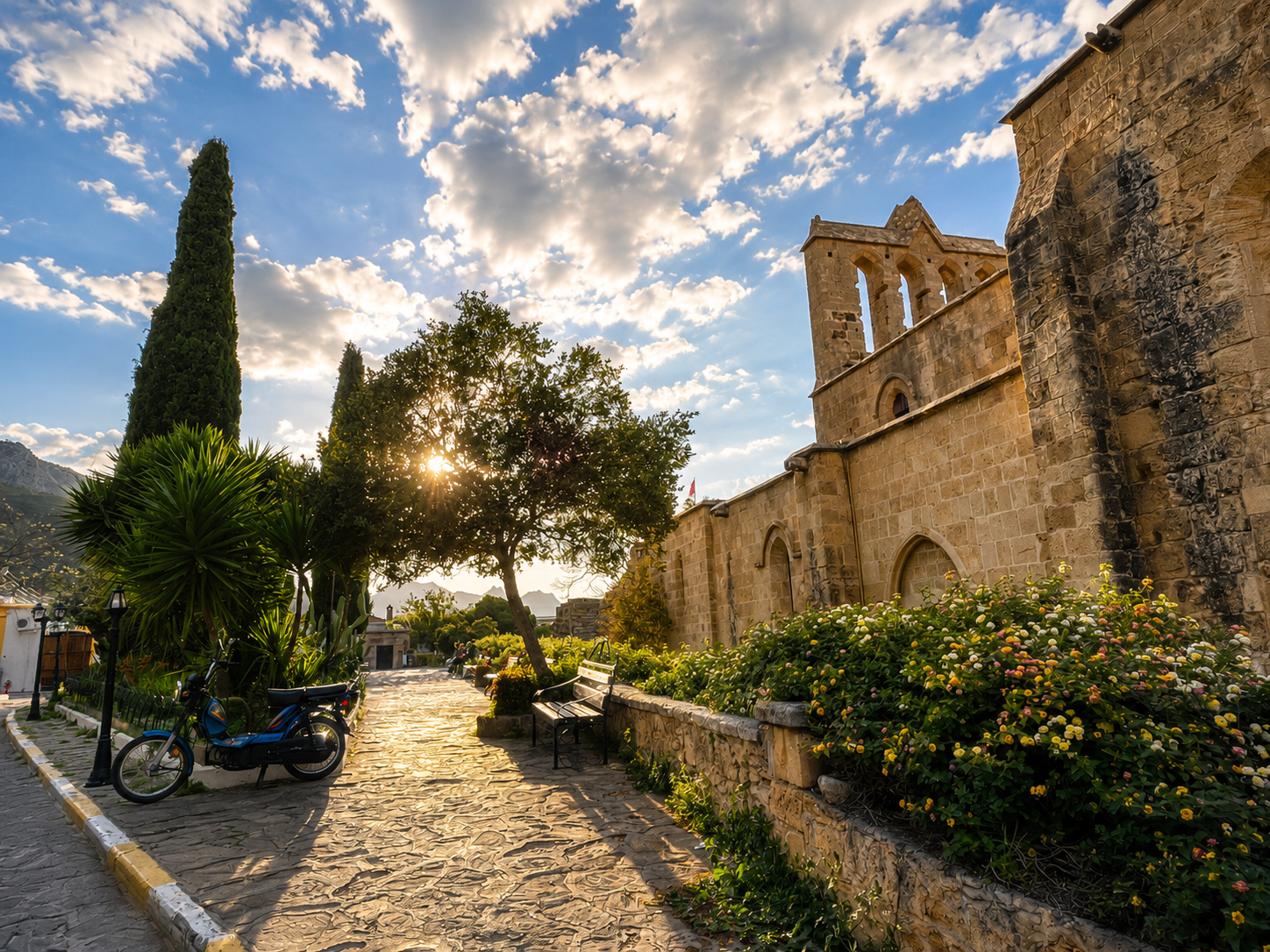
The village of Bellapais (Beylerbeyi) does not end where the archaeological site finishes; in many ways, that is where the village begins. While the abbey is the primary landmark, the charm of Bellapais lies in its continuous, inhabited character. Stone built houses, lush gardens, narrow lanes, towering cypress trees, and quiet restaurant terraces stretch out along the ridge, offering a sense of place that persists long after you have left the monument’s courtyard.

Bellapais Abbey beside the village lanes and gardens

Lawrence Durrell and the Tree of Idleness

For many British visitors, Bellapais carries a permanent literary identity, largely due to Lawrence Durrell’s classic memoir, Bitter Lemons. His account of living in the village during the 1950s is how many people first encounter the place, and it remains a compelling reason to visit.

The "Tree of Idleness" is the most famous element of this literary story. While the specific tree is a subject of constant debate, with various claims and layers of folklore accumulating over the decades, it is best to treat this part of the experience lightly. The literary thread is real and provides a wonderful context for your visit, but the village’s beauty does not rely on confirming the identity of a single trunk. We suggest using Durrell’s writing as a companion to your visit: read a few chapters before you arrive or enjoy them after you have walked the lanes, allowing yourself to compare the historical, literary village with the living, modern one you have just experienced.

Eating in Bellapais

Cafe in Bellapais village near the abbey
Beside the abbey

Kybele

One of the best known Bellapais restaurants, with dining directly within the historic grounds of the abbey.

Hotel restaurant

Bellapais Gardens

A current hotel and restaurant with elevated views ideal for a more relaxed, longer lunch or evening meal.

Village restaurant

Bella Moon

We suggest Bella Moon for its atmosphere; it’s a long-standing favourite in the village for a reason.

Established local name

Abbey Bell Tower

A long-standing restaurant associated with Bellapais and the abbey-side dining circuit. Compare it for a meal led visit rather than choosing only by the closest terrace.
Planning a visit to Bellapais

How long should you allow?

Allow at least an hour for the abbey itself. Add longer if you want to walk the village lanes, stop for coffee or make a meal part of the visit.

Do opening arrangements vary?

Yes. The official visitor schedule is seasonal. For 1 April to 31 October 2026, Bellapais Abbey is listed as open 08:00 to 19:00, with last entry at 18:00. Check the current official listing before setting out.

Is there an admission charge?

Yes. Entry is typically 150 TL for a full ticket and 50 TL for a student ticket. Prices can change, so check upon arrival.

What about accessibility?

Do not assume full step-free access. Bellapais is a historic complex built across different levels.

Can you combine Bellapais and Kyrenia?

Yes. Bellapais and Kyrenia make a sensible same-day pairing, particularly if you allow the abbey proper time rather than trying to rush both places.

Read our Kyrenia Harbour & Town guide

Check current official museum and site visiting hours

Give Bellapais the time it deserves

From Villa Zeytin, the village can be planned around the light, a meal and the rest of the day. That is a better use of local advice than simply telling guests it is “near Kyrenia”.